

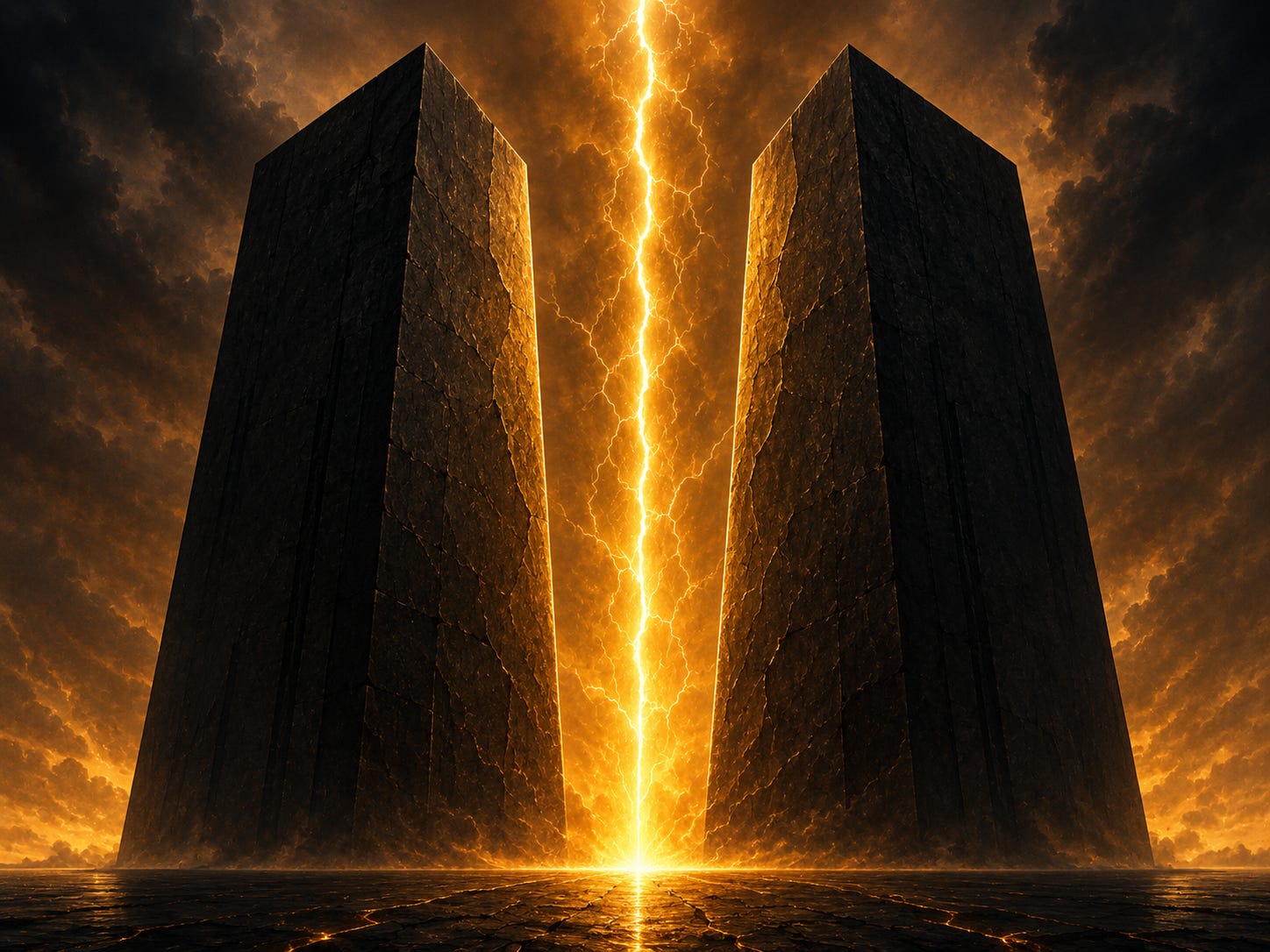
Two empires pretending to oppose each other can survive longer than one forced to face itself. The United States and Russia operate this way: each performs the other’s threat so neither must confront its own decay.
The conflict is not ideological. It is structural.
America requires a menacing Russia to justify scale, surveillance, and the expansion of security machinery. Russia requires an encircling America to justify repression, mobilization, and permanent control. Remove either antagonist and the domestic narrative begins to fracture.
Both systems are aging. Both redirect attention outward to stabilize themselves inward.
America projects stability while its institutions hollow. Russia projects strength while its foundations thin. The adversary becomes a pressure valve, converting internal strain into external posture.
Ukraine became another stage for this function. Territory is the visible terrain, but coherence is the real objective. Each empire reenacts the myth it needs to survive — America performing righteous reach, Russia performing imperial resilience.
Victory is destabilization.
A Russia too weak to menace collapses America’s security story.
An America too diminished to threaten dissolves Russia’s siege mythology.
Resolution exposes the structure.
Stalemate preserves it.
So the rivalry persists — not as a path to conclusion, but as a stabilization mechanism.
The twin front is not the line between the empires.
It is the seam where each one hides the fracture it cannot afford to face alone.
