The Mobilizer

Attention disperses. Urgency fades. Participation returns to ordinary life.
Any movement that depends upon continued participation eventually confronts the same problem: How do you keep people from standing down?
Some answer with service. Some with identity. Some with material benefit. Others discover something more reliable.
Threat.
Threat concentrates what ordinary life disperses. It converts anxiety into attention, attention into participation, and participation into power. The figure who can repeat this conversion becomes indispensable.
This is the mobilizer.
The mobilizer is rarely selected for wisdom. Or restraint. Or resolution.
The mobilizer is selected because the movement cannot preserve itself while its constituency relaxes. A solved problem releases attention. A settled victory lowers urgency. A population permitted to return to ordinary life becomes difficult to summon again.
Over time, this becomes selection pressure. Those who continually regenerate urgency inherit the movement. Those who cannot eventually disappear.
The ideology is incidental. The enemy is interchangeable. The grievance evolves. The selection process remains.
Every generation therefore produces new mobilizers. Not because history repeats itself. Because institutions that depend upon continual mobilization repeatedly select for the same role.
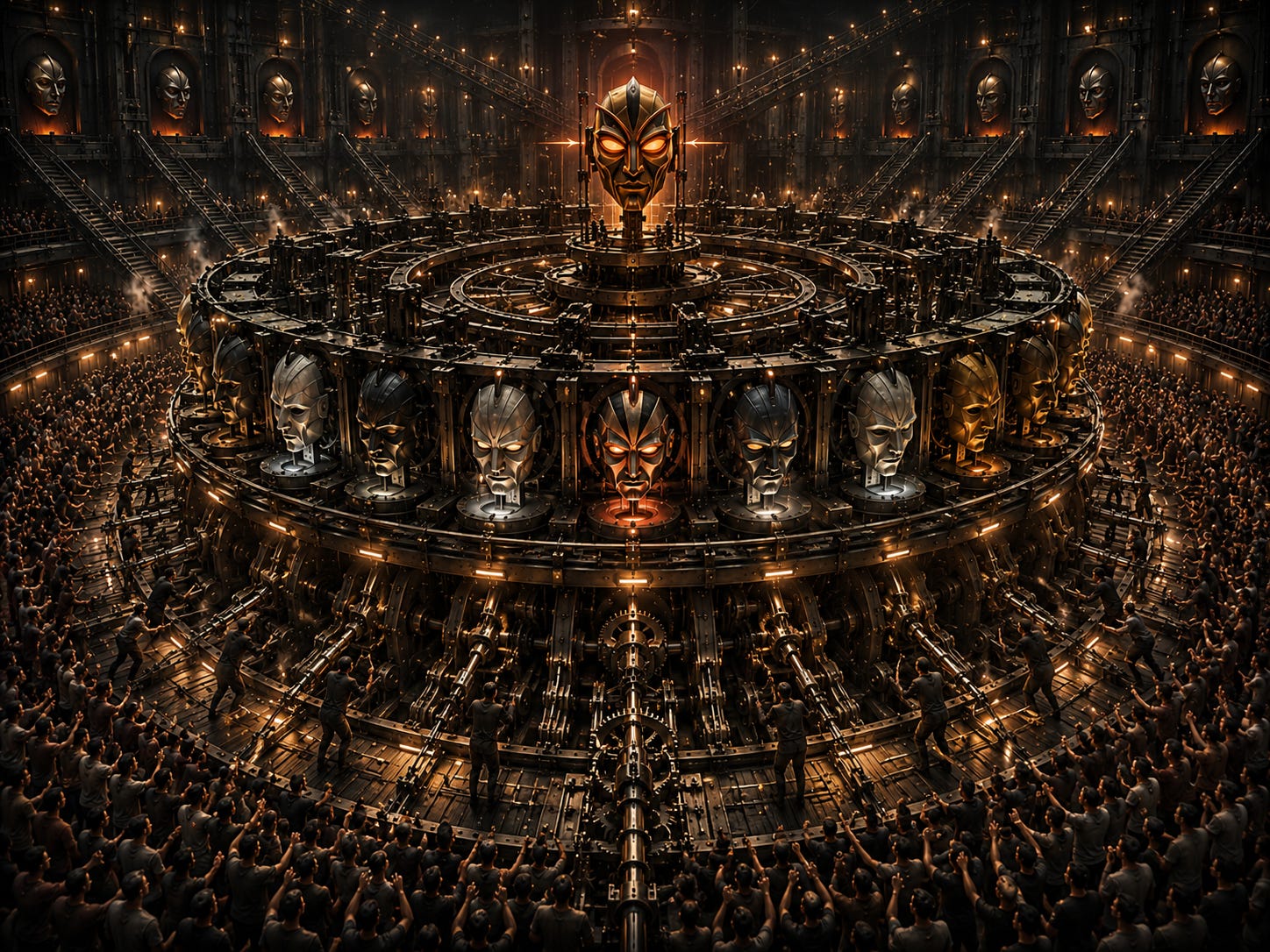
The mobilizer appears to command the movement. But the movement is selecting the mobilizer.
The faces keep changing. The architecture does not.

Discussion about this post