

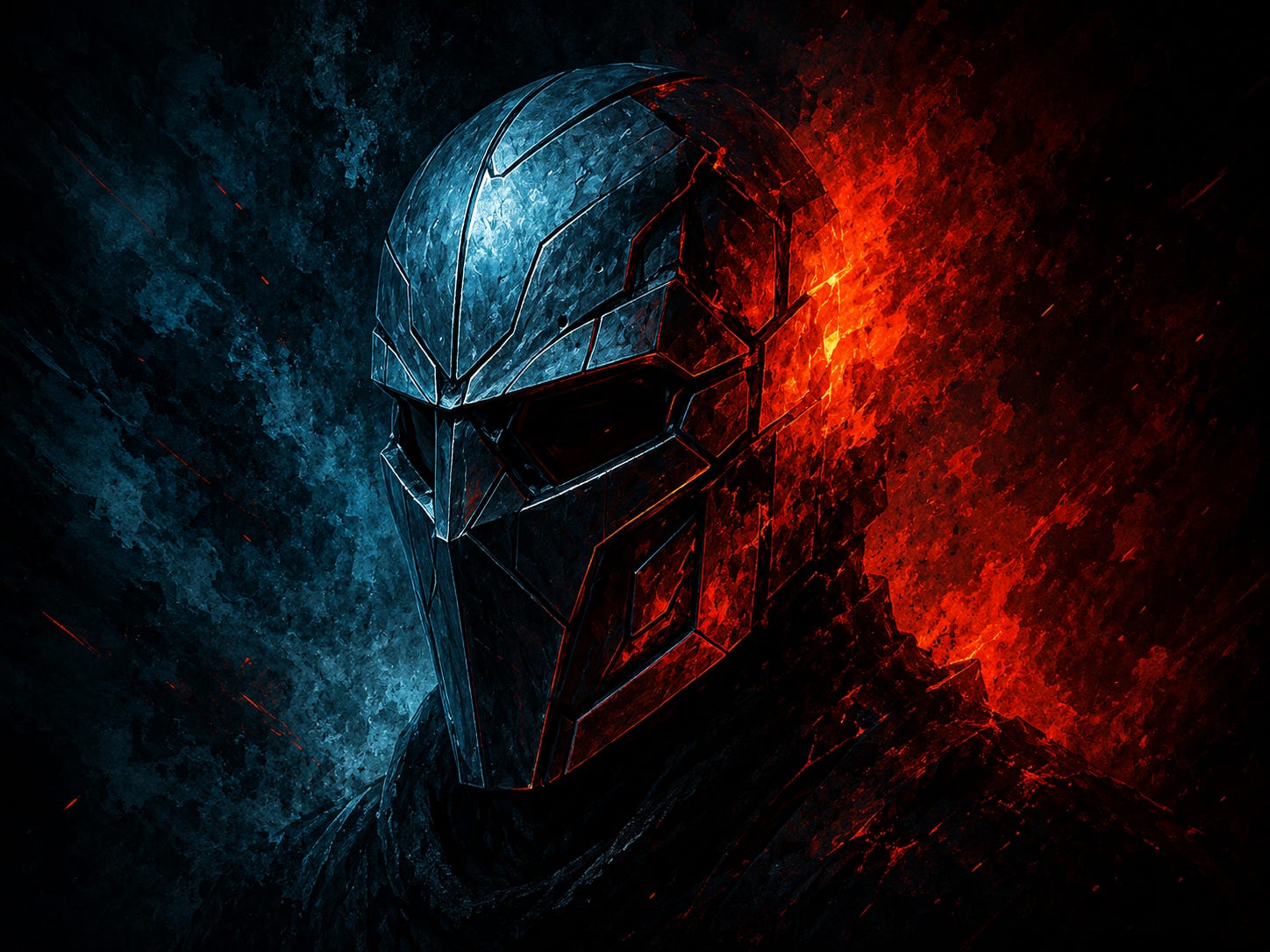
He speaks as if the world arranges itself around his conclusions. Nothing is proposed. Everything is declared. Doubt loses its shape in that field because uncertainty is treated not as a condition to navigate, but as evidence of weakness.
His certainty feels preloaded, not earned. Most people take its seamlessness as proof. They mistake the absence of visible deliberation for the presence of truth.
He describes danger with the calm of someone who expects you to supply the fear. He names enemies you’ve never met and waits for you to recognize yourself in the conflict. Whether you do is irrelevant. The accusation has already established the terrain.
He no longer evaluates the world; he assigns it. Blame becomes weightless. Opposition becomes confession. Every disagreement arrives already categorized as proof of the thing it denies.
He doesn’t argue. He concludes. The conclusion arrives first, and everything afterward is sorted according to its relationship to that conclusion. Conversation becomes administration.
He invokes crisis as a permanent condition and rescue as a predetermined outcome. The instability he describes becomes the material from which his authority is built. Every warning strengthens the need for the certainty delivering it.
You see the mechanism clearly now. His power is not persuasion. It is the systematic removal of alternatives. You are either aligned with restoration or implicated in ruin. Positions disappear until only the approved choices remain visible.
This is not conviction. It is engineered inevitability. It pulls at you—not through persuasion, but through the erosion of anything that could resist it.
He stands in that manufactured certainty as if it were light, but you recognize it as a boundary. Not to guide, but to blind.
