

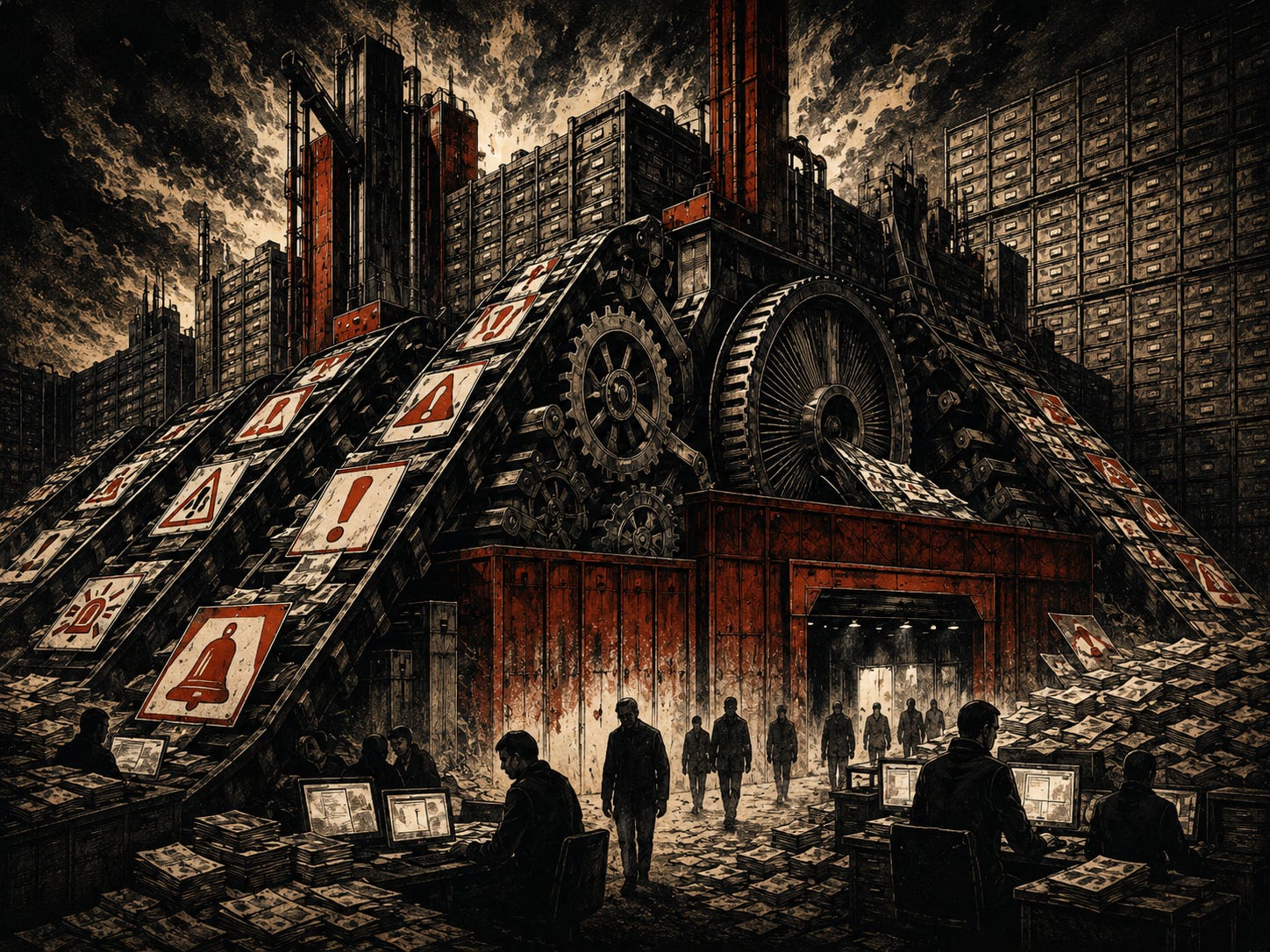
Systems don’t forget history. They metabolize it — converting warnings into noise, patterns into anecdotes, catastrophes into decor.
Forgetting is not a failure of memory. It is the mechanism by which a system preserves its self-image. Nothing threatens stability more than the recognition that collapse has a blueprint.
The past isn’t ignored because it’s obsolete. It’s ignored because it indicts the present.
Every historical rhyme forces a confrontation: If this has happened before, then it is happening again. If it’s happening again, then someone could have prevented it. And if someone could have prevented it, then innocence is off the table.
Most people would rather torch continuity than surrender innocence.
So the system supplies an alibi: Times have changed. The tools are new. They didn’t have the internet or AI.
As if novelty severs lineage. As if new interfaces rewrite the architecture of fear, power, ambition, or denial.
Every era believes itself unrecognizable to the last. But the machinery underneath — consolidation, projection, mythmaking, selective memory — remains untouched. Only the interface changes.
And so the cycle persists:
A warning appears.
The system reframes it as overreaction.
The institutions tasked with vigilance perform analysis instead of action.
The public, numbed by pace and convenience, accepts the reframing.
The warning is archived, moralized, or mocked.
Its next iteration arrives on schedule.
When people say history is irrelevant, what they mean is: Recognition would require interruption. Interruption carries cost. Cost selects against courage. And courage cannot be mass-produced.
Forgetting becomes adaptive. A civic reflex. A way to maintain the hallucination that the present is unprecedented, and therefore excused from the burdens of precedent.
But history doesn’t need to repeat to be relevant. It only needs to remain visible. And visibility is precisely what the system eliminates — not by censorship, but by saturation. Warnings drown in the flood of everything else.
What emerges is a population convinced that nothing applies to them, and a system relieved that no one is looking at the gears.
The collapse, when it comes, is never a surprise to the machinery that enabled it. It is only a surprise to the people who agreed not to see.
The system didn’t fail to warn them. It warned them perfectly. They just learned to treat every warning as background radiation — omnipresent, ignorable, harmless.
Until it isn’t.
