

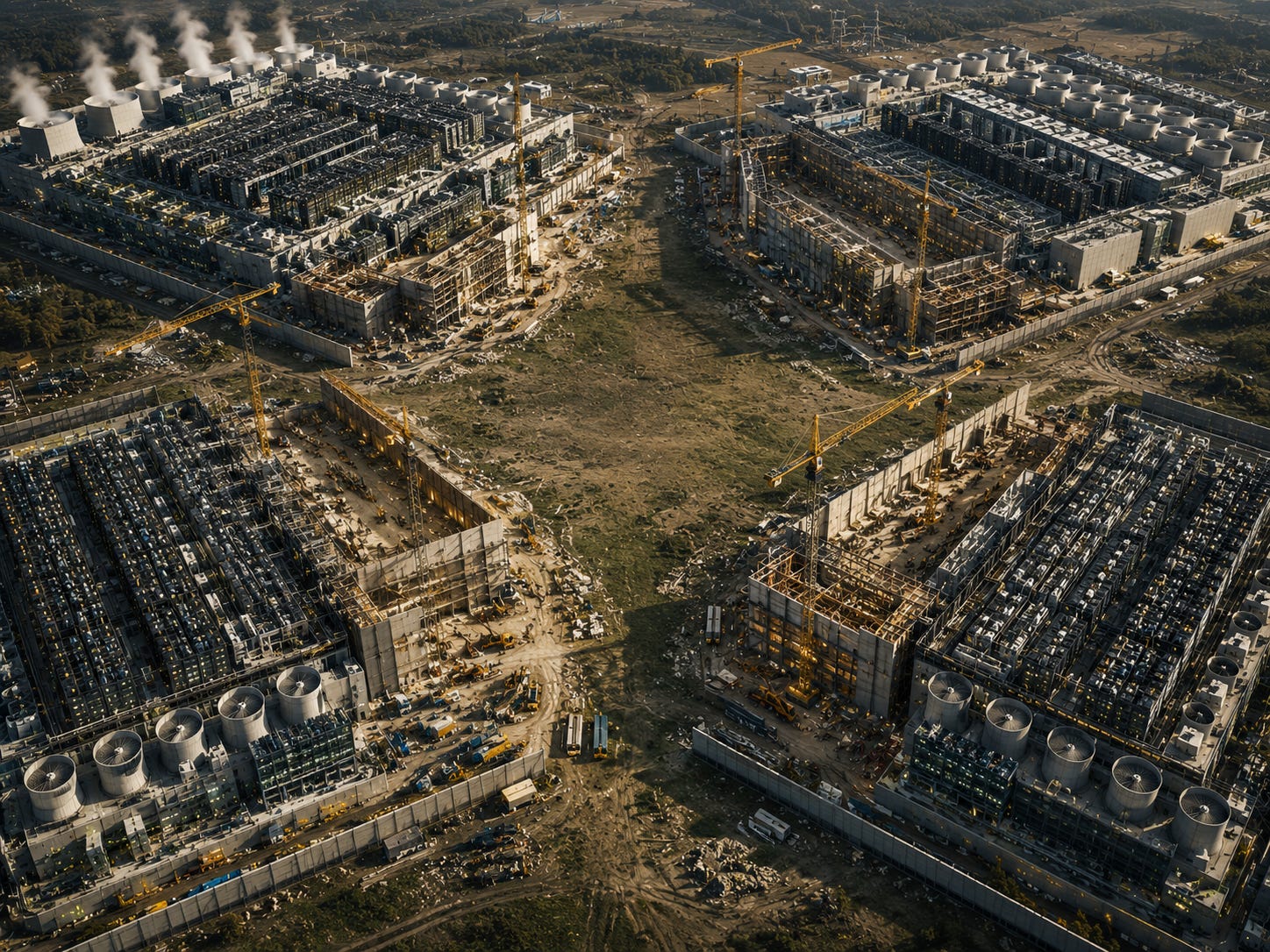
The danger does not stop the race.
The danger can be obvious and the race can continue anyway. Each participant can understand the risk, prefer a slower pace, and still conclude that slowing down alone would be worse.
Capability changes the balance. More capability can mean more economic leverage, military advantage, technological control, or strategic independence. Restraint is therefore valuable only when restraint is shared. A participant considering delay is not choosing between racing and safety. It is choosing between racing and the possibility of watching someone else race without it.
What if they don’t?
They do not need to know that someone else will continue. They only need to believe it is possible. Once it is plausible, speed becomes defensive. More capability answers the possibility of more capability elsewhere. Secrecy answers secrecy. Deployment answers deployment. Each move supplies the reason for the next.
The race begins generating its own justification.
Even agreement about the danger can tighten the mechanism. The more consequential the technology appears, the greater the cost of arriving second. A warning that might support restraint in isolation becomes evidence for acceleration under competition.
The danger becomes the sales pitch.
Coordination exposes the same trap. Coordination requires competitors to reveal what advantage rewards them for hiding, expose what rivalry rewards them for protecting, and trust restraint they cannot afford to assume. Any agreement capable of slowing the race must survive the possibility that someone will gain by breaking it.
What if they don’t?
No participant has to want the outcome. No one has to believe the pace is wise. Each actor can privately prefer a slower system while behaving exactly as the faster system requires.
Because once stopping alone looks more dangerous than continuing together, the race no longer needs anyone to believe in the finish line.
It only needs everyone to fear arriving second.
