

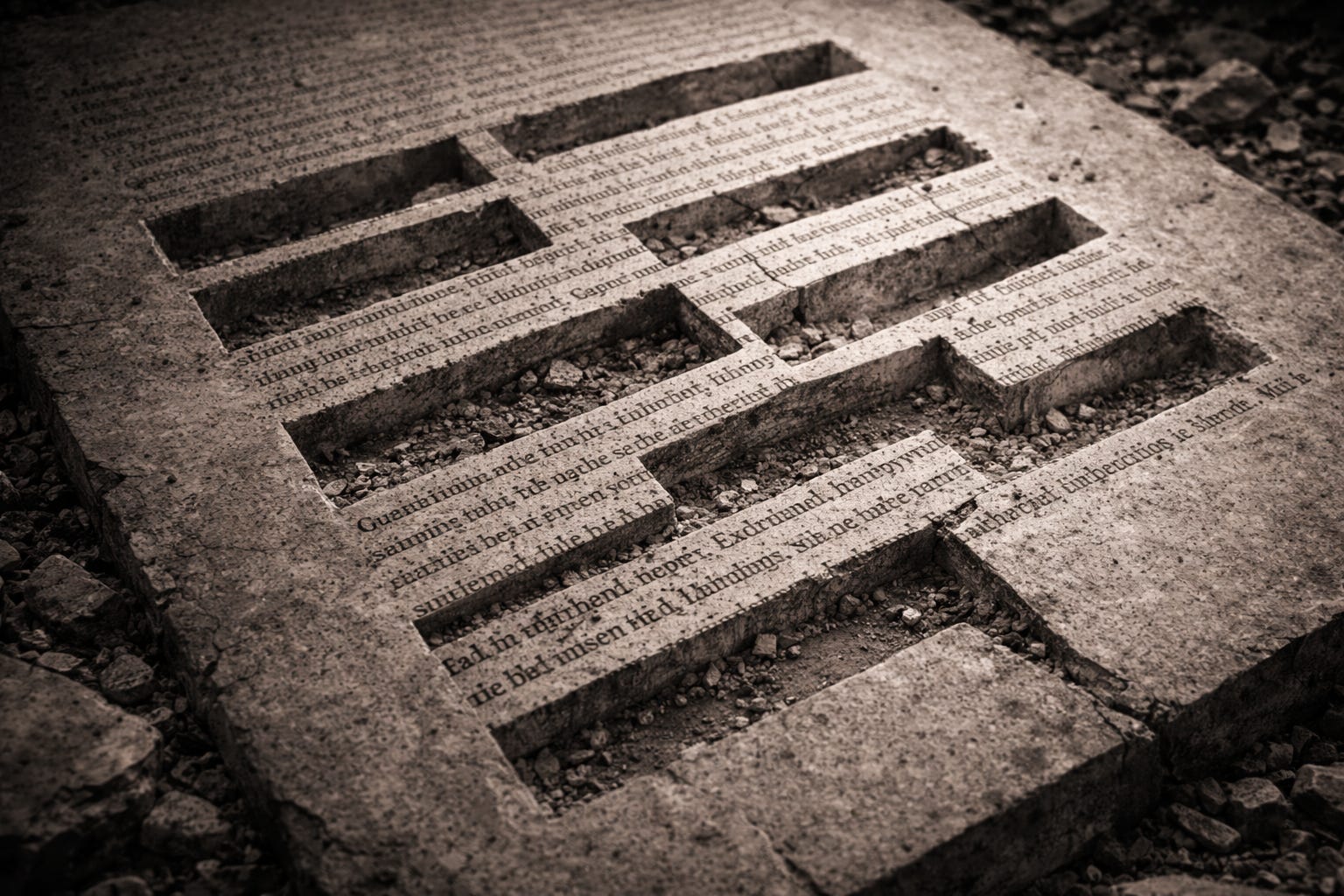
For decades the phrase meant a threat.
Teachers said it.
Employers implied it.
Governments enforced it.
Your mistakes would follow you forever.
The record was permanent.
But only in one direction.
Institutions remembered everything about you.
You remembered almost nothing about them.
Policies changed.
Statements disappeared.
Documents were updated.
Links broke.
Databases migrated.
Archives thinned.
The public record was never permanent.
It was maintained.
And maintenance includes deletion.
Power relies on a quiet property of systems:
Memory decays.
When the record fades, narratives harden.
What cannot be verified can be rewritten.
So archives appear whenever drift is felt.
Stone tablets.
Monasteries copying manuscripts.
Vaults sealed in mountains.
Libraries built to outlive governments.
Power edits the record.
Archivists harden it.
Permanent ledgers shift the balance.
Once a document is sealed into an immutable network, deletion stops being routine.
It becomes visible.
Expensive.
Sometimes impossible.
The record detaches from the institution that created it.
Memory becomes infrastructure.
For most of modern history, power operated inside a soft past.
Records blurred.
Policies dissolved.
Archives thinned with time.
Permanent memory changes the environment.
Every preserved document lengthens the half-life of accountability.
And when the past stops decaying on schedule,
power must operate inside a record it no longer controls.
The record remains.
The machinery continues.
