

Racial conflict is often framed as prejudice between groups.
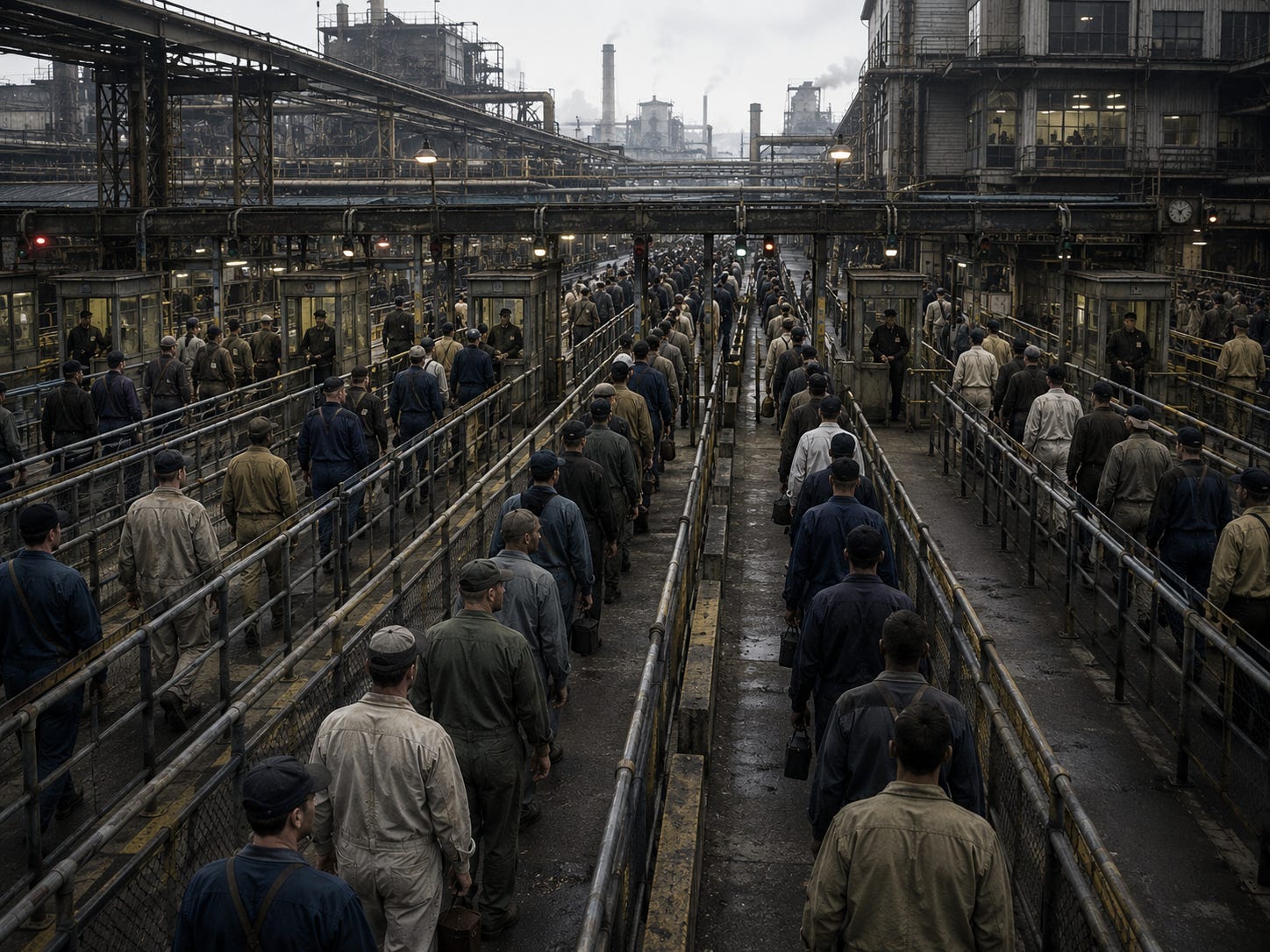
Large labor systems require hierarchy to remain stable.
Hierarchy becomes fragile when workers recognize common position.
So the hierarchy fractures.
Plantation economies formalized the template.
A small owner class governed a large labor force.
Numerical imbalance created risk.
The solution was not only force.
It was segmentation.
Enslaved laborers occupied the bottom.
Poor whites occupied a narrow rung above them.
The rung held little material power.
It carried symbolic distance.
A worker who believes he stands above someone else is less likely to notice who stands above him.
Colonial administrations exported the model.
Empire rarely ruled through equal law.
It ruled through managed fragmentation.
Populations were divided into administratively useful categories.
Different rules.
Different privileges.
Different punishments.
Communities that once negotiated horizontally now negotiated upward through imperial authority.
Mistrust replaced shared position.
Coalition collapsed before it formed.
Industrial labor systems reproduced the mechanism in new language.
Workers performing similar labor were separated by race, immigration status, or legal classification.
Pay scales diverged.
Union eligibility diverged.
Neighborhoods diverged.
Contact remained constant.
Solidarity did not.
Employers did not need to suppress unity.
They needed only to preserve difference long enough for resentment to take root.
Political systems adopted the same pressure valve.
Economic pressure accumulates vertically.
Without diversion it travels upward.
Power rarely absorbs that pressure.
It redirects it.
Campaigns convert structural grievance into cultural threat.
Economic displacement becomes demographic anxiety.
Wage stagnation becomes identity competition.
The target shifts laterally.
Neighbors become rivals for status, safety, and recognition.
The coalition that might challenge concentrated power never assembles.
Mistrust performs the work.
Each group suspects the other of hidden advantage.
Every grievance is interpreted through rivalry rather than shared constraint.
Coordination becomes impossible.
Meanwhile the architecture remains intact.
Ownership structures persist.
Wealth concentration deepens.
Institutional power consolidates.
Conflict below becomes evidence that the system above is necessary.
Division appears natural because it is continuously reproduced.
The mechanism does not require universal hatred.
It requires only enough separation to prevent alignment.
A segmented workforce negotiates against itself.
A fragmented electorate votes against coalition.
Hierarchy survives without constant intervention.
The system learned long ago that control is cheaper when the population polices its own boundaries.
Racism persists not because it is irrational, but because it is structurally useful.
